
A photovoltaic module is a packaged assembly of solar cells that converts sunlight into electrical power, giving you a reliable, scalable way to capture solar energy. It is designed to turn sunlight directly into electricity, whether for a rooftop system, a remote sensor, or a utility-scale array.
This article explains what a photovoltaic module is, how it works, how it differs from other solar equipment, the common module types, and where they’re used today. You’ll get clear, practical details to help you choose, compare, or simply understand the role PV modules play in clean energy.
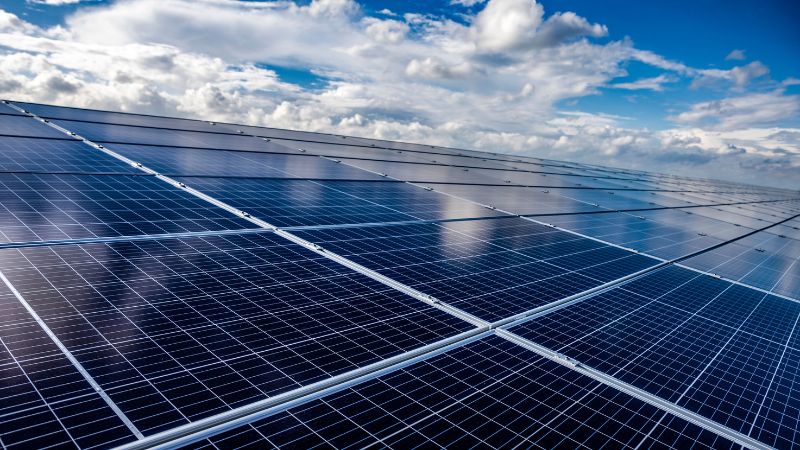
What Is a Photovoltaic Module?
A photovoltaic module is a packaged assembly that turns sunlight into direct-current (DC) electricity. It combines multiple semiconductor cells into a durable unit you can install on roofs, ground mounts, or vehicles.
Basic Definition
A photovoltaic (PV) module, often called a solar panel, contains many PV cells electrically connected in series and/or parallel to deliver a usable voltage and current for your system. Each cell is a semiconductor wafer (commonly crystalline silicon) that generates a small voltage when photons free electrons; combining cells scales that voltage and current to practical levels for inverters, batteries, or DC loads.
Manufacturers rate modules by peak power under Standard Test Conditions (e.g., 1000 W/m² irradiance, 25°C cell temperature). Ratings you’ll see—like 350 W or 430 W—represent maximum DC output under those conditions and help you size arrays and estimate production.
Key Components Mentioned Briefly
- Cells: The active semiconductor units (monocrystalline, polycrystalline, thin-film) that convert light to electricity.
- Encapsulant: Transparent polymer (usually EVA) that cushions cells and protects against moisture.
- Front glass: Tempered low-iron glass provides weather resistance and optical transmission.
- Backsheet: Polymer layer that insulates and seals the rear of the module.
- Frame: Aluminum frame that supports mounting and seals edges.
- Junction box & diodes: Junction box houses wiring, bypass diodes prevent hot-spot heating when partial shading occurs.
You’ll choose modules based on cell type, power rating, efficiency, temperature coefficient, and durability certifications (IEC 61215/61730), because those specifications determine how the module performs in your location and installation.
How Does Photovoltaic Work?
The magic behind PV modules is based on the photoelectric effect. Here’s a step-by-step breakdown of the process:
-
Photon Absorption: When sunlight, composed of particles called photons, strikes the semiconductor material (usually silicon) in a solar cell, it transfers its energy.
-
Electron Excitation: This energy knocks electrons loose from their atoms within the semiconductor, creating pairs of negative charges (electrons) and positive charges (“holes”).
-
Electric Field Direction: Each solar cell has a built-in electric field, created by a p-n junction (layers of silicon doped with different materials). This field acts like a one-way street, pushing the freed electrons in a specific direction.
-
Current Flow: The movement of these directed electrons creates a flow of Direct Current (DC) electricity.
-
From Module to Usable Power: A single cell produces only a small amount of power. By wiring many cells together in a module, their voltage and current are combined. The DC electricity from one or many modules is then sent to an inverter, which converts it into the Alternating Current (AC) used in our homes and the power grid.
What Is the Difference Between Solar Module and Photovoltaic Module?
You’ll usually see the terms solar module and photovoltaic (PV) module used interchangeably. Both refer to the same physical unit: multiple photovoltaic cells assembled, laminated, and framed to convert sunlight into electricity.
The phrase photovoltaic module is more precise and technical. Industry standards, datasheets, and certification documents favor PV module because it directly references the photovoltaic process—light-to-electricity conversion.
In everyday conversation, people say solar panel more often. That casual term can mean a single PV module or an assembled section of an array. When you need clarity—especially for purchases or engineering—you should use PV module.
- PV cell: the smallest component that produces electricity.
- PV module / Solar module: a sealed assembly of cells.
- Solar panel: common name for a module; sometimes used for an assembly of modules.
If you’re comparing products, look at technical specs such as power (W), efficiency (%), dimensions, and warranty. Those numbers tell you more about performance than the label alone.
Applications and Selection Guidelines
PV modules are incredibly versatile, and the optimal choice depends heavily on the application:
- Residential Rooftops: Powering homes, reducing bills, and providing energy independence.
Selection Tip: Prioritize high efficiency and aesthetics. Framed, all-black monocrystalline or high-efficiency PERC modules are popular to maximize limited roof space and complement your home’s design.
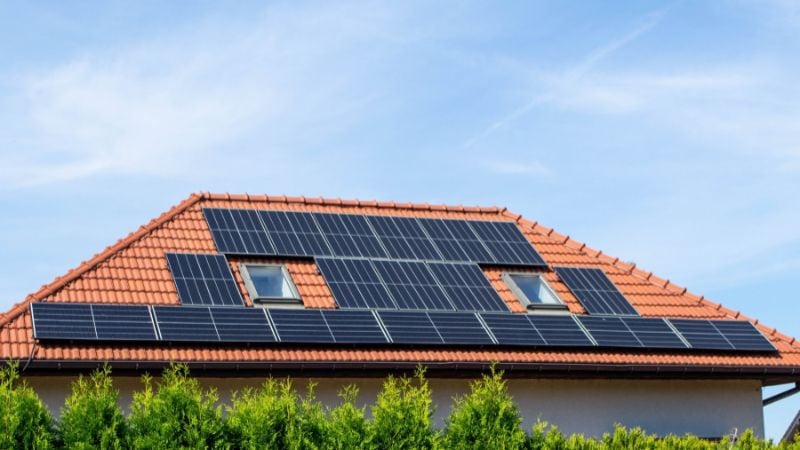
- Commercial, Industrial, and Utility-Scale: Installed on warehouses, factories, or in vast solar farms to offset high energy costs and feed the grid.
Selection Tip: Focus on cost per watt, long-term durability, and reliable warranties. Polycrystalline or cost-effective monocrystalline modules are common. Bifacial modules are an excellent choice here to capture reflected light and boost overall farm yield. - Off-Grid and Specialized Uses: Providing power for remote cabins, telecommunications, agricultural pumps, and rural electrification. Also integrated into portable chargers, backpacks, and consumer products.
Selection Tip: Match the module to the environment. For harsh conditions (marine, desert), select modules rated for high-temperature, high-humidity, or salt-mist. For mobility, portable or flexible thin-film panels are ideal.
The Future and Market Trends
The future of PV is bright and driven by continuous innovation:
- Rising Efficiency & Falling Costs: The core trend of more power for less money continues, making solar the cheapest electricity in history in many regions.
- Advanced Cell Technologies: Perovskite solar cells and tandem cells (stacking silicon with perovskite) promise to shatter current efficiency limits in the coming years.
- Integration and Storage: PV is increasingly integrated with smart energy management systems and home battery storage (like Tesla Powerwall) for true 24/7 solar power.
- Global Energy Transition: PV modules are a cornerstone technology in the global effort to decarbonize the energy sector and combat climate change.
Conclusion
From their ingenious physics to their silent operation on rooftops worldwide, photovoltaic modules are more than just hardware; they are a gateway to a cleaner, more resilient energy system. They empower individuals, businesses, and nations to generate their own power from an abundant, renewable source.
As technology advances and adoption grows, PV modules will undoubtedly remain at the forefront of powering our sustainable future, one ray of sunlight at a time. Benefits include lower energy bills, reduced greenhouse gas emissions, and increased energy independence. Incentives and falling prices can improve payback, but check lifecycle costs and warranties before buying.
- Check if your site is suitable (roofing, shading, orientation).
- Compare efficiency, degradation rate, and warranty terms.
- Include installation costs, incentives, and expected energy yield in your decision.
Power Your Clean Energy System: Choose Deye’s Reliable Energy Storage Solutions
When building an efficient and self-sufficient clean energy system, besides high-efficiency photovoltaic modules, a safe, intelligent, and long-lasting Energy Storage System (ESS) is the key to unlocking the full value of solar power and ensuring energy autonomy. With over 20 years of experience in PV systems, Deye ESS provides comprehensive, one-stop energy storage solutions for residential, commercial & industrial, and even utility-scale applications.
Why is Deye ESS Trustworthy?
- Safety as the Foundation: Utilizes LFP (LiFePO₄) battery cells that are non-toxic and stable, fundamentally eliminating the risk of thermal runaway and providing peace of mind for both home and business environments.
- Long-Term Investment: Batteries boast a service life of over 10 years, retaining 70% of their capacity even after 6,000+ cycles, ensuring a strong long-term return on your investment.
- Flexible, Intelligent & Efficient: The systems feature a modular design, allowing capacity to be flexibly scaled from 5 kWh to 360 kWh to meet diverse needs. Equipped with an intelligent Battery Management System (BMS) for real-time monitoring and protection, achieving charge/discharge efficiency of up to 95%.
- Comprehensive Application Coverage: Offers both Low Voltage (LV) and High Voltage (HV) series, along with AC and DC coupling options. Perfectly suited for various scenarios including solar self-consumption, time-of-use arbitrage, demand charge management, emergency backup power, and off-grid applications.
Whether your goal is to increase household energy independence, reduce commercial operating costs, or participate in grid services, Deye can provide a tailored solution. Contact us for more information and get a free quote.