Increase Solar Self-Consumption With Smart Batteries and Load Shifting
Harnessing the sun’s power with solar panels is a fantastic step towards energy independence and environmental responsibility. However, simply installing panels doesn’t automatically mean you’re using all the clean energy you produce. The key to truly maximizing your solar investment lies in self-consumption, especially when paired with smart batteries and strategic load shifting.
Understanding Self-Consumption in Solar Systems
You may produce plenty of solar energy but still see small bill reductions and slow payback. Key causes include how much of that generation you actually use in your home, timing mismatches with peak rates, and changing utility policies that reduce export value.
The Self-Consumption Ratio Explained
Solar self-consumption means you use the electricity your panels generate at the moment they produce it, instead of exporting it to the grid. Higher self-consumption directly lowers the energy you must buy from the utility during the day and increases real dollar savings.
Common ways to raise self-consumption:
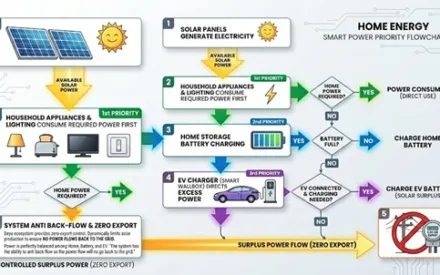
- Shift high-energy tasks (dryer, EV charging, dishwasher) to daytime.
- Install smart plugs or timers to run loads when panels produce most.
- Add a battery to store midday surplus for evening use.
Measure it by comparing on-site generation used immediately versus exported kWh on your meter. Aim to maximize the percentage of generation consumed onsite to turn production into tangible bill reductions.
Self-Consumption vs. Self-Sufficiency
It’s important to distinguish between self-consumption and self-sufficiency.
- Self-consumption is about using as much of your own generated solar power as possible.
- Self-sufficiency (or energy independence) refers to your ability to meet all your energy needs from your own generation, often aiming to be entirely off the grid. While high self-consumption contributes to self-sufficiency, they are not identical concepts.
How Solar Self-Consumption Works
In essence, solar self-consumption works by synchronizing your electricity usage with your solar production. When the sun is shining brightly, your panels are at their peak output. If your home’s demand for electricity matches this output, you’re achieving high self-consumption. Any excess can then be stored or fed into the grid.
Types of Solar Self-Consumption Systems
The level of self-consumption you can achieve often depends on the type of solar system you have installed.
Grid-Tied Solar Systems (Without Energy Storage)
These are the most common solar installations. Your panels are connected directly to the utility grid. When your panels generate more electricity than you’re using, the excess is exported to the grid, and you typically receive credits (net metering). When your home needs more power than your panels are producing (e.g., at night), you draw electricity from the grid. While these systems offer some self-consumption, they don’t allow for storing excess energy for later use, limiting your self-consumption ratio.
Grid-Tied Solar Systems With Battery Storage (Hybrid Systems)
Hybrid systems combine solar panels with a battery storage system, all connected to the utility grid. This setup is a game-changer for self-consumption. During the day, excess solar energy charges the battery instead of being exported to the grid. In the evenings or on cloudy days, you can draw power from your battery rather than importing from the grid, significantly increasing your self-consumption and reducing your reliance on utility power.
Off-Grid Solar Systems
Off-grid systems are not connected to the utility grid at all. They rely on solar panels, a large battery bank, and often a backup generator (for extended cloudy periods) to meet all energy needs. All solar energy is stored in the battery or used immediately—there’s no grid to feed excess energy to.
Maximizing Solar Self-Consumption Strategies
Achieving a high self-consumption ratio involves a combination of smart technology and behavioral changes.
Behavioral Adjustments: Low-Cost, High-Impact Changes
Simple changes in your daily habits can make a big difference:
- Run appliances during peak sun hours: Use dishwashers, washing machines, and dryers during the middle of the day when your solar production is highest.
- Charge electric vehicles (EVs) during the day: If you have an EV, plug it in when the sun is shining.
- Delay energy-intensive tasks: If possible, postpone activities that use a lot of electricity until your panels are generating abundantly.
Energy Efficiency Upgrades: Reduce Overall Demand
The less energy you need, the easier it is for your solar system to meet that demand.
- Upgrade to LED lighting: LEDs use significantly less electricity than traditional bulbs.
- Improve insulation: A well-insulated home requires less energy for heating and cooling.
- Invest in energy-efficient appliances: Look for appliances with high ENERGY STAR ratings.
Investing in Energy Storage
This is arguably the most impactful strategy for maximizing self-consumption.
Solar Batteries: Modern home batteries store excess solar energy for use whenever you need it, day or night. They allow you to shift your consumption away from grid power during expensive peak hours or when solar production is low.
Monitor your solar self-consumption
You can’t optimize what you don’t measure. Regularly monitoring your solar production and home energy consumption is vital.
- Inverter Monitoring Apps: Most modern solar inverters come with companion apps or web portals that provide real-time data on your solar generation.
- Smart Home Energy Monitors: Devices can be installed to track your overall home electricity use, allowing you to see exactly when and where you’re consuming power.
- Battery Management Systems: If you have a battery, its monitoring system will show you how much energy is being stored and discharged, helping you understand your self-consumption patterns. By understanding these data points, you can make informed decisions about when to use appliances, when to charge your EV, and how well your strategies are working.
Common Pitfalls to Avoid When Optimizing Solar Self-Consumption
Focus on practical mistakes that waste money or reduce energy savings: spending too much on batteries before changing habits, neglecting seasonal output shifts, not measuring results, and mixing incompatible hardware. Avoid these errors to keep costs down and self-consumption high.
- Avoid overinvesting in batteries before optimizing usage. First, shift major appliance use to midday using timers to increase self-consumption cheaply. Monitor your usage to size batteries correctly.
- Do not ignore seasonal variations in solar production. Base your strategy on the lowest expected winter output, not peak summer, to ensure reliable performance and accurate savings estimates year-round.
- Do not fail to monitor and adjust your system. Regularly check performance data and bills. Small adjustments like cleaning panels or updating schedules can recover significant energy without new hardware.
- Avoid choosing incompatible components. Ensure all hardware (inverters, batteries, smart devices) can communicate using open standards to enable effective control and optimization features.
Conclusion
Increasing your solar self-consumption is not just about saving money; it’s about maximizing the value of your renewable energy investment and taking greater control of your home’s energy future. By combining conscious behavioral adjustments, energy efficiency improvements, and the integration of smart battery storage and home technology, you can significantly boost your self-consumption ratio.
Choose Deye ESS for Maximum Value
As a listed sci-tech enterprise with decades of expertise in inverters and energy storage, Deye delivers tailored solutions that align perfectly with the core strategies of load shifting, smart battery storage, and regional compliance.
Ready to take the next step in optimizing your solar system? Explore our products and contact us for a free quote.
Frequently Asked Questions
1. How can I get the most out of my solar panels?
The best way is to use your large appliances, like the dishwasher, washing machine, and pool pump, during the sunniest part of the day (late morning to early afternoon). You can also set your water heater to warm up during these peak hours. To save on heating and cooling, adjust your thermostat to use more solar power during the daytime.
2. What gadgets can help me manage my solar power?
To track your energy, you can install a home energy monitor. It shows you how much power your panels are generating and how much you’re using in real-time, usually on an app. You can also use smart plugs to schedule when individual appliances turn on and off. For even better optimization, a home battery system can automatically store and use your solar energy where it’s needed most.
3. When is the best time to use my appliances with solar power?
Try to run your big appliances that use a lot of energy, like the laundry machine, dishwasher, or your electric vehicle charger, in the middle of the day. A good time is usually between 10 AM and 3:30 PM when your panels are producing the most electricity. You can use timers on your appliances to automatically start them during these sunny hours.
4. How do smart home devices help with solar energy?
Smart devices make it easier to use the power you generate. For example, a smart thermostat can automatically heat or cool your home when your panels are producing a lot of electricity. A smart EV charger can do the same, charging your car only when you have surplus solar power. These gadgets help you use more of your own clean energy and reduce your electricity bills.