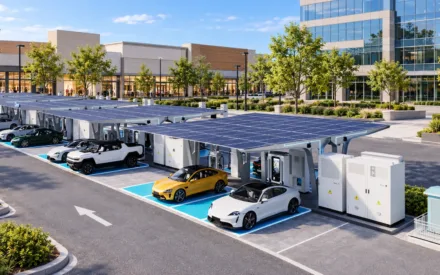

Data center battery storage can strengthen resilience, but it must be designed around the load, transfer sequence and failure modes of the facility. The same applies to hospitals, industrial controls and communications sites, where even a short interruption can stop processes or trigger a lengthy restart.
A battery energy storage system (BESS) is not automatically a replacement for an uninterruptible power supply (UPS). In many critical-power designs, the two serve different roles. The UPS protects sensitive equipment immediately, while a larger BESS, generator or microgrid supports longer-duration operation and site-level energy management.
This guide explains the questions that should shape a critical-load storage project.
UPS and BESS: Related but Not Identical
A UPS is designed to deliver conditioned power with little or no interruption to protected equipment. It bridges disturbances and the period before another source becomes available. Its performance is defined by factors such as topology, transfer behavior, output quality and runtime at a specified load.
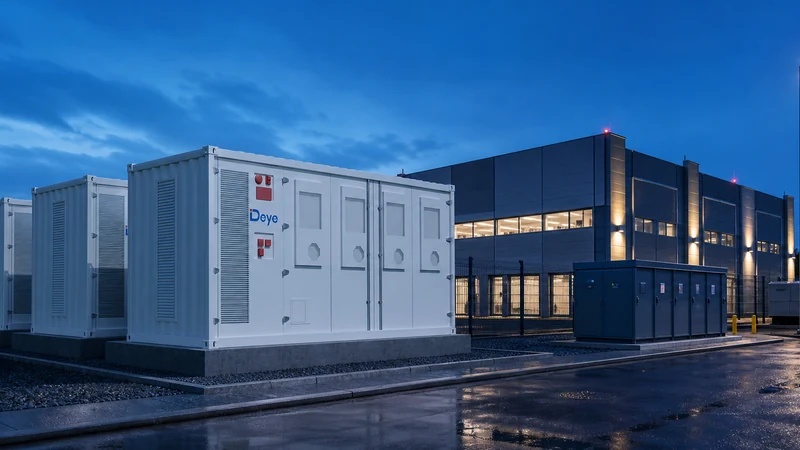
A BESS is typically designed for broader energy services. It may provide peak shaving, tariff optimization, renewable-energy shifting and backup support. A grid-forming BESS with suitable switching and controls can help energize an islanded facility, but the exact transition time and power quality must meet the load’s requirements.
For highly sensitive IT equipment, “fast” is not a sufficient specification. The engineering team should define the maximum interruption the load can tolerate and verify the complete transfer sequence through studies and testing.
Define the Critical Load Before Sizing the Battery
The facility’s total electrical demand is rarely the same as its critical load. A data center may need to keep servers, networking, cooling, pumps, controls, fire systems, security and emergency lighting online. Some comfort or administrative loads can be shed.
Create a load list that records:
- Continuous operating power.
- Startup or inrush demand.
- Power factor and harmonic characteristics.
- Required runtime.
- Maximum acceptable interruption.
- Restart sequence.
- Priority when stored energy becomes limited.
Cooling must be included. Servers convert most of their electrical input into heat. A design that supports IT racks but loses the cooling plant may only postpone the outage. Pumps, fans and compressors can also have starting currents that affect inverter sizing.
Size Power and Energy Separately
Power in kilowatts or megawatts determines whether the storage system can carry the critical load. Energy in kilowatt-hours or megawatt-hours determines how long it can carry that load.
For a simplified example, a 750 kW critical load requiring 30 minutes of battery support needs an ideal energy output of:
750 kW × 0.5 hours = 375 kWh
The installed nominal battery capacity must be higher after accounting for usable DoD, conversion losses, auxiliary loads, temperature, aging and reserve. The power conversion system must also handle 750 kW continuously plus any approved transient or motor-starting demand.
If the battery is only a bridge to generators, runtime may be relatively short. If it must support an extended grid outage, energy capacity grows quickly. A hybrid design can use the battery for immediate response, then coordinate generators and solar for longer events.
Design the Source-Transfer Sequence
A critical-power system may include the utility grid, UPS, BESS, solar and generators. What matters is not just which sources exist, but what happens second by second after a disturbance.
When the grid moves outside limits, the UPS may hold sensitive loads while switchgear isolates the protected bus. The BESS then supports the local network, lower-priority loads are shed, and generators start if the outage continues. Solar can contribute when available. Every transition and the return to grid need defined timing, interlocks and fallback behavior.
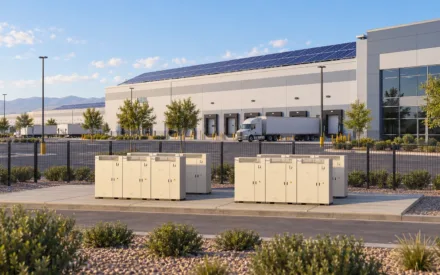
The Deye utility-scale ESS solution shows PV, storage and generator configurations for large, resilient power applications. Deye’s C&I ESS solution also includes backup support for critical commercial loads.
Redundancy Must Cover More Than Battery Capacity
Adding extra kWh does not remove every single point of failure. Review redundancy across:
- Battery strings or cabinets.
- PCS blocks.
- Controls and communications.
- Auxiliary power and cooling.
- Switchgear and bus sections.
- Monitoring and emergency systems.
N+1 or 2N concepts should be applied to the required function, not used as marketing labels. If one PCS fails, can the remaining units carry the full critical load? If one battery string is isolated, is the required runtime still available? If communications fail, do local controls maintain a safe operating state?
Maintainability matters too. Operators should be able to remove a module or subsystem from service without unnecessarily exposing the entire critical load.
Use the Battery Without Consuming the Resilience Reserve
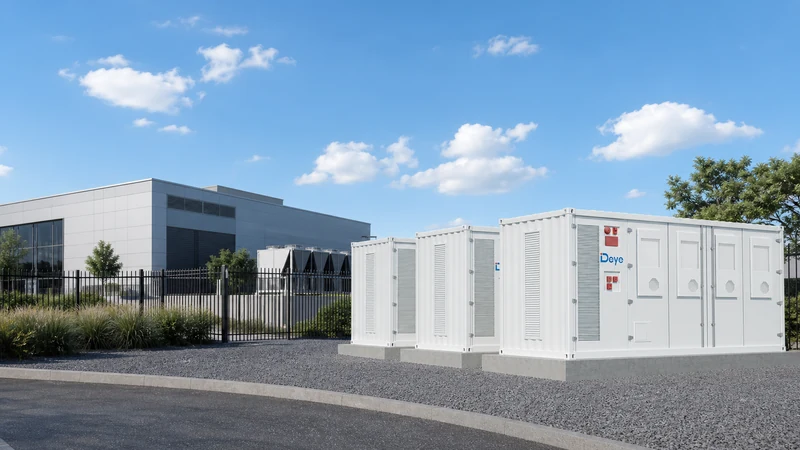
A BESS may also limit peak demand, shift energy purchases or store excess solar during normal operation. The EMS must preserve the reserve required for critical loads and maintain safe local fallbacks if external communications fail.
Safety, Siting and Thermal Management
Large lithium battery systems require coordinated safety engineering. The design may include cell and module monitoring, isolation, ventilation or liquid cooling, gas and smoke detection, fire suppression, emergency stops, separation distances and first-responder access.
Local codes, standards and authority requirements determine the final design. Product certification is important, but project-level compliance also depends on installation, integration and operation.
Temperature control affects available power, service life and reliability. Cooling systems and their auxiliary supply should be included in the resilience analysis. If the HVAC supporting the battery fails, the control system needs a defined response before temperatures exceed operating limits.
Testing and Operations Complete the Design
A critical-load system should be commissioned against realistic scenarios rather than a basic power-on check. Tests may cover grid loss, failed source start, low battery SOC, loss of one PCS, communication failure, load shedding, black start and return to grid.
Operational plans should assign inspection, capacity testing, alarm response, firmware management, spares, staff training and periodic load reviews. Trending battery temperature, cell balance, available energy and alarms can reveal deterioration before it becomes an outage issue.
Questions to Resolve Before Procurement
Ask suppliers and engineering partners:
- What load must remain online, and for how long?
- What is the maximum acceptable transfer time?
- Is the BESS a UPS replacement, a generator bridge or a longer-duration source?
- What capacity remains at end of warranty or design life?
- Can the system meet runtime after one major component is unavailable?
- How are cooling, controls and switching powered during an outage?
- Which normal-operation services can run without reducing the reserve?
- What site tests will prove the sequence works?
Build Resilience as a Complete Power System
Battery storage can give data centers and other critical facilities fast response, longer backup and better energy control. The best result comes from coordinating the UPS, BESS, generators, renewable sources, switchgear, cooling and operating procedures as one system.
Planning storage for a data center or another mission-critical facility? Submit the inquiry form on the Deye ESS Contact page. Include your country, facility type, critical-load kW, required runtime, maximum transfer time, grid voltage, existing UPS and generators, redundancy target, site conditions and project schedule. That information will help the team start a focused discussion around the right C&I or utility-scale architecture.