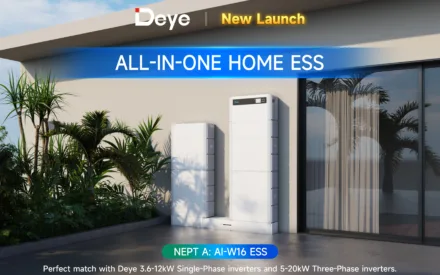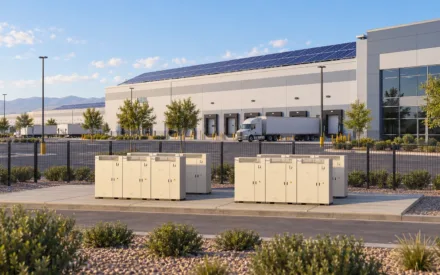

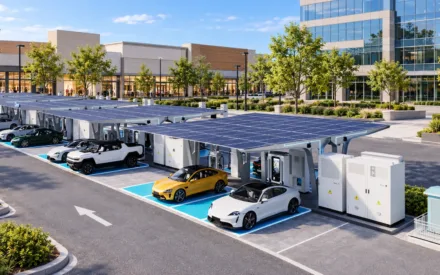

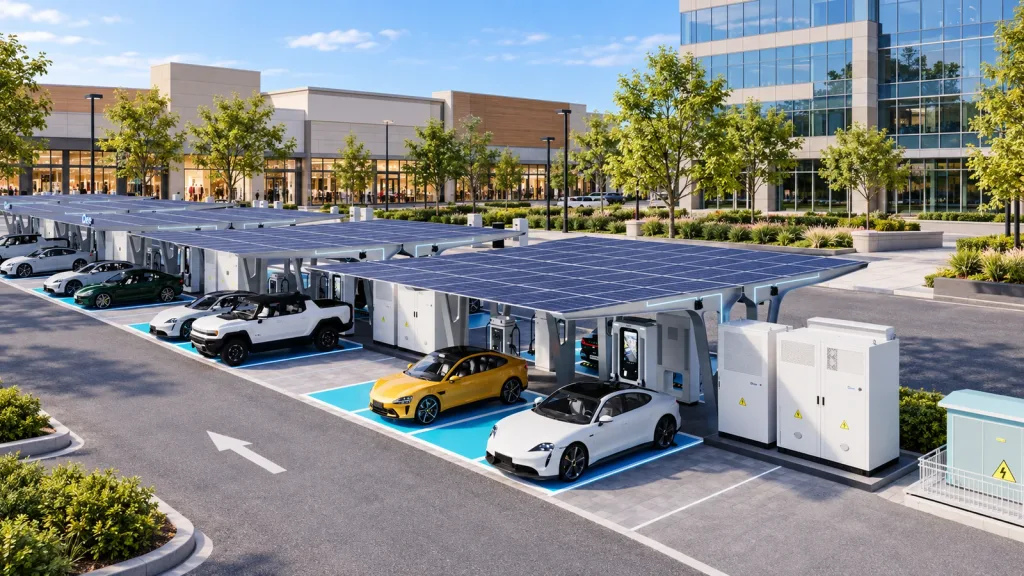
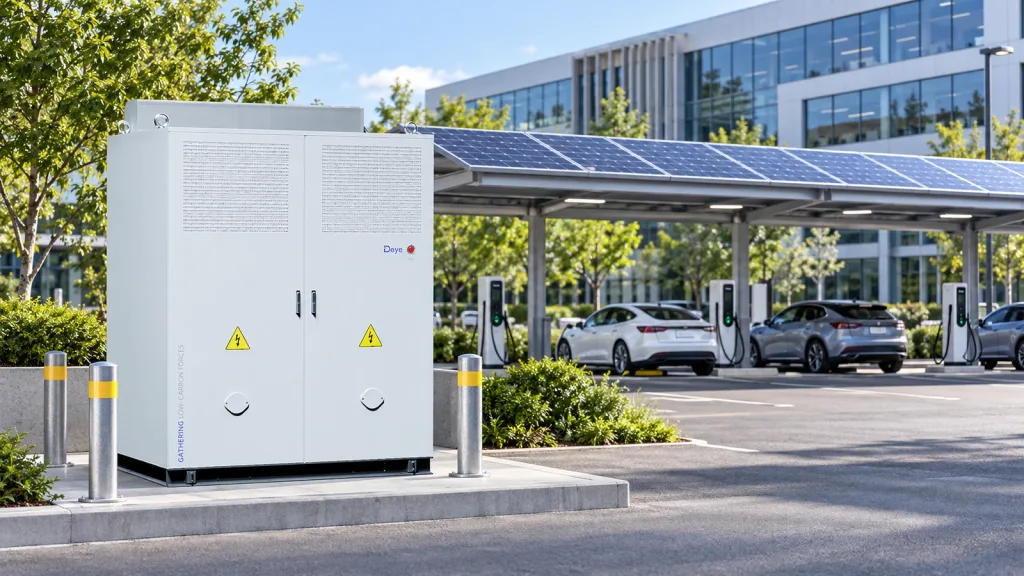
A PV-BESS-EV solution coordinates photovoltaic generation, battery energy storage, electric vehicle charging, building loads, and energy management. For shopping centers and office buildings, this can increase on-site solar use, manage charging peaks, reduce tariff exposure, and support future charger expansion. The value depends on load timing, parking behavior, tariff structure, grid capacity, and the control strategy.
Why commercial properties need coordinated design
Shopping centers often have long operating hours, cooling and lighting loads, weekend traffic, and public charging demand. Office buildings typically show weekday daytime consumption, commuter parking dwell time, and peaks linked to HVAC and occupancy.
These patterns can complement solar, but unmanaged EV charging can create a new peak just as building demand rises. A battery can buffer part of that demand, while an EMS allocates power among the building, chargers, battery, solar, and grid.
Deye’s PV-BESS-EV Charging Solution is designed around coordinated generation, storage, charging, and management for commercial complexes, campuses, transport hubs, and industrial sites.
What each part of the system does
PV generation
Rooftop and solar-carport arrays produce on-site electricity. Their economic contribution depends on usable area, shading, structural capacity, orientation, weather, export limits, and the coincidence between solar production and facility demand.
Battery energy storage
The BESS can store surplus PV, discharge during building or charging peaks, shift energy into later tariff periods, and maintain a defined reserve. Battery kW determines the power contribution; usable kWh determines duration.
EV charging
The EVSE layer includes charger power, connector mix, payment or access control, communication, parking rules, and utilization targets. Public retail charging, employee charging, fleet charging, and tenant charging create different load profiles and commercial models.
Energy management
The EMS turns operating priorities into real-time dispatch. It can cap grid import, prioritize solar, manage charger groups, reserve energy, and respond to tariffs. Confirm device interfaces, control resolution, cybersecurity, alarm handling, and fallback behavior during communications loss.
Four value streams to evaluate
1. Increase solar self-consumption
Office loads may consume much of the weekday solar production, while a shopping center can use both rooftop and carport PV across longer hours. When production exceeds immediate demand, the battery can store energy for evening building loads or later charging.
The benefit equals the grid purchase avoided, adjusted for losses and the value that exported solar would otherwise receive.
2. Limit demand peaks
Fast chargers can add high, concentrated demand. A coordinated controller can reduce charger power dynamically and discharge the battery to keep grid import within a target. This may reduce demand charges or help the site operate within an existing connection limit.
The battery does not remove the need for an electrical capacity study. The design must consider transformer loading, switchgear ratings, protection, harmonics, cable routes, and the possibility that the BESS is unavailable or at minimum SoC.
3. Shift energy across tariff periods
The battery can charge from surplus solar or during a permitted low-cost period, then discharge when grid energy is more expensive. Model round-trip losses, battery wear, reserve, and forecast error. Do not assume every daily price spread is profitable.
4. Support property and mobility goals
Solar-covered parking can improve the charging experience while supporting site energy and emissions goals. Chargers may create a new amenity or revenue stream, but utilization, fees, maintenance, and parking turnover must be modeled.
Shopping center design priorities
Retail sites should analyze traffic by hour and day, anchor-tenant loads, seasonal cooling, cinema or restaurant operating hours, and public charging dwell time. Charger placement should support visibility and accessibility without disrupting deliveries, fire access, pedestrian routes, or parking circulation.
The charging strategy may combine a smaller number of higher-power chargers with more destination chargers. Dynamic load management can allocate power based on session priority rather than allowing every connector to draw maximum power simultaneously.
Office building design priorities
Office projects should examine employee arrival patterns, fleet vehicles, visitor charging, tenant billing, and the building’s morning HVAC ramp. Long parking dwell times can make managed lower-power charging effective for many users.
Define who controls the system and who receives each benefit. The building owner, energy-service provider, tenants, and charging operator may have different meters and commercial interests. The metering and settlement design should be agreed before procurement.
A practical sizing workflow
- Measure the base load. Obtain at least 12 months of interval electricity and demand data.
- Model PV. Use the actual roof and carport constraints, export rules, and seasonal production.
- Forecast charging. Estimate arrival time, dwell time, required energy, charger mix, and growth.
- Define the grid limit. Confirm transformer, service, interconnection, and contractual constraints.
- Set operating priorities. Rank self-consumption, peak control, arbitrage, charging availability, and backup reserve.
- Simulate battery power and energy. Test normal days, extreme weather, special events, low solar, and high charger utilization.
- Verify the business case. Include equipment, civil and electrical works, software, maintenance, fees, degradation, financing, and incentives.
Integrated product and control routes
The MC-LC430-2H2 Series is a Deye C&I PV-BESS-EV charging-integrated product route for Europe and Australia. Its documentation should be reviewed for the precise regional configuration and project requirements. For system-level control planning, MS-EMS provides another relevant route.
Confirm product fit against grid voltage, power and duration, charging architecture, ambient conditions, communications, protection, market approvals, installation, and service access.
Controls matter more than a static energy balance
Annual kWh totals cannot show whether the grid connection will overload at 5 p.m. or whether the battery will be empty during a charging surge. The dispatch simulation should use time-series data and enforce real limits.
A robust control hierarchy can prioritize critical building loads, apply a grid-import ceiling, distribute available charger power, charge the battery from surplus PV, and maintain a configurable reserve. Local protection must remain effective even if the cloud connection is unavailable.
Commissioning and performance measurement
Commissioning should verify meter and CT orientation, charger communications, grid-limit response, PV curtailment logic, battery limits, alarm routing, emergency stops, and recovery after communications or grid interruptions.
Track KPIs such as PV self-consumption, maximum grid import, charger energy and utilization, curtailed charging sessions, battery throughput, availability, peak-demand reduction, and net operating value. Report service quality alongside energy savings; aggressive peak control that leaves drivers unable to charge may not meet the commercial objective.
FAQ
Can a BESS avoid a grid upgrade for EV charging?
It may defer or reduce an upgrade by buffering charging demand, but only after a capacity and time-series study. The site must still operate safely when the battery is unavailable or depleted.
Should EV chargers use solar power directly or through the battery?
Direct solar-to-load use generally avoids an extra conversion cycle. The battery is useful when solar production and charging demand do not coincide or when grid peaks must be controlled.
How large should the battery be?
Size it from the grid limit, charger and building load profiles, target peak reduction, tariff windows, solar surplus, reserve, and required duration. Charger nameplate power alone is not enough.
Can the same battery perform peak shaving and backup?
Yes, if the controls maintain sufficient reserve and the electrical design supports islanded operation. Reserving backup energy reduces the capacity available for daily optimization.
What data should property owners provide to suppliers?
Provide interval load and PV data, bills and tariffs, electrical drawings, transformer capacity, parking and charger forecasts, operating hours, grid rules, site plans, resilience requirements, location, and rollout schedule.
Plan the property as one energy system
Designing solar, storage, and EV charging for a shopping center or office portfolio? Contact Deye ESS with interval demand, proposed PV area, electrical capacity, charger mix, parking behavior, tariff, location, and expansion plan. A coordinated model can determine where storage creates measurable value and where smarter charging alone may be sufficient.