
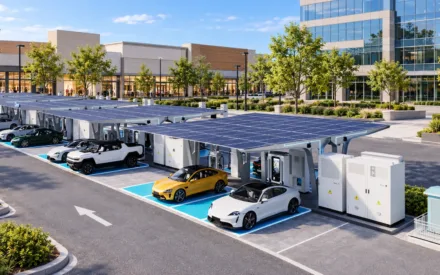

Industrial facilities do not need a microgrid simply because they have solar panels or batteries. They need one when the cost of interrupted production, poor power quality, grid constraints, or volatile tariffs justifies coordinated control of on-site energy assets. A well-engineered industrial microgrid helps a facility keep priority loads operating, reduce peak demand, and use local generation more effectively—while making the operating rules clear before a disturbance occurs.
What an industrial microgrid actually does
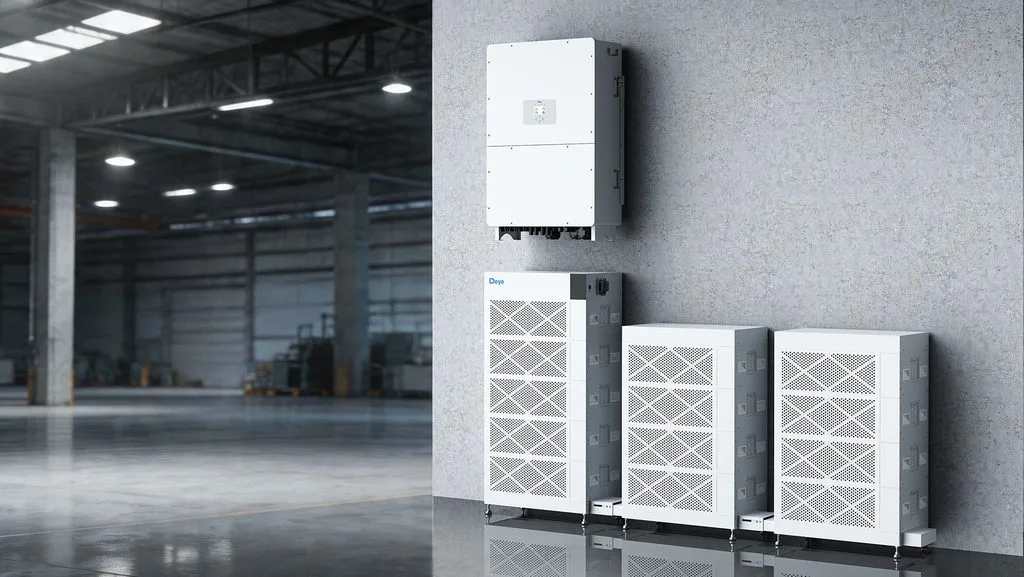
An industrial microgrid connects and coordinates one or more local resources—typically grid supply, PV, a battery energy storage system (BESS), generators and controllable loads. In normal operation, it may optimise solar self-consumption, demand charges and time-of-use energy purchases. During a grid event, it can isolate an approved portion of the site and operate it in island mode when the equipment, protection scheme and controls are designed for that duty.
The pivotal element is coordinated. A battery alone can supply energy, but it does not define which loads remain online, when a generator starts, how a bus is isolated, or how the facility reconnects safely to the grid. Those decisions belong in the microgrid design and control philosophy.
Four ways a microgrid improves resilience
1. It protects the loads that matter most
Start with a critical-load register rather than total site consumption. For a factory, critical loads may include process controls, safety systems, network equipment, selected production lines, pumps, cold storage, compressed air, or essential HVAC. Non-critical loads can be shed in a defined sequence to preserve stored energy.
This distinction prevents a common error: sizing a backup system for average site demand rather than the real load that must survive an outage. For sensitive equipment, define the maximum acceptable interruption and coordinate the BESS with UPS equipment where required. Deye’s guide to battery storage for data centers and critical loads explains why a site-level BESS and a UPS have different roles.
2. It adds a planned transition between power sources
Resilience is determined in the first seconds of a failure. The design should state what happens when voltage or frequency moves outside limits: which switchgear isolates the microgrid bus, whether the PCS establishes voltage and frequency, which loads are shed, when generators start, and how reconnection is permitted.
EPCs should validate this sequence through protection studies, controls testing and commissioning scenarios—not assume that all devices will behave correctly once connected. Generator compatibility, motor starts, fault levels, harmonic performance and grounding all need project-specific engineering.
3. It preserves a resilience reserve while improving economics
The same BESS can perform peak shaving or charge from surplus PV in normal conditions. However, an energy manager should not use all available battery capacity for tariff arbitrage at 5 p.m. if the facility needs outage cover at 7 p.m. The EMS needs a reserve policy: for example, a minimum state of charge based on the critical-load runtime, forecast PV, generator availability and outage risk.
This is where intelligent scheduling becomes operationally valuable rather than a dashboard feature. Deye’s C&I ESS solution is designed around energy management, peak–valley scheduling and backup support for commercial loads.
4. It makes expansion more manageable
Industrial demand rarely remains fixed. A modular microgrid can be planned with future PV, battery, PCS and feeder capacity in mind. The initial phase may protect a critical process and reduce demand peaks; later phases can add storage, solar or EV charging as loads and tariffs change. The design must still assess short-circuit ratings, transformer capacity, protection coordination, communications and site footprint for the end state.
Microgrid, UPS and generator: different jobs
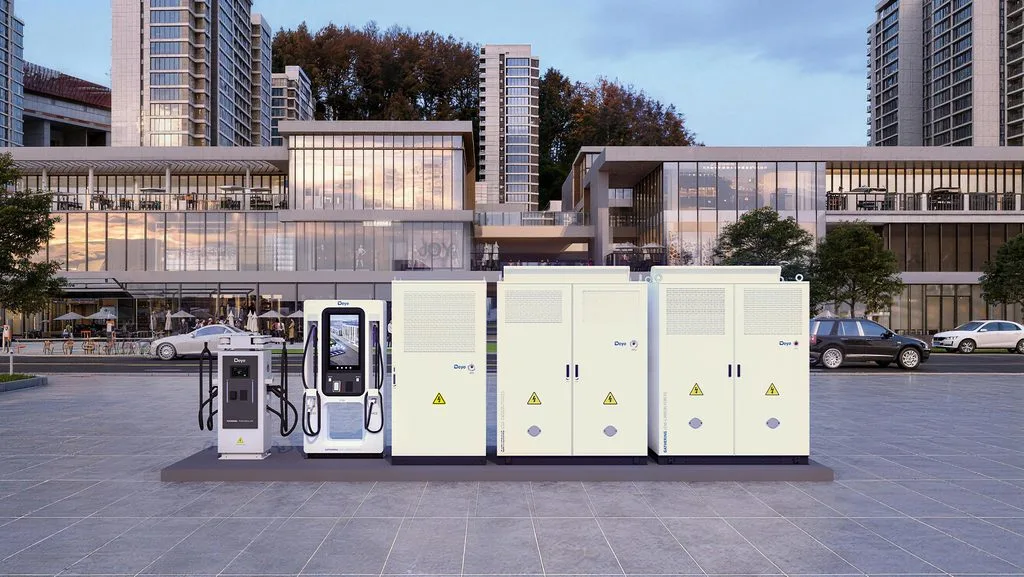
A UPS normally bridges a very short interruption and conditions power for sensitive equipment. A generator provides long-duration energy but has start-up, fuel, maintenance and loading considerations. A BESS can respond rapidly, reduce normal-operation demand peaks and bridge the generator-start interval. The microgrid control layer coordinates these resources and the site loads.
For example, a plant with a 2MW maximum demand may only need a 600kW critical bus to run through an outage. If it requires two hours of support, the first sizing screen uses that critical bus—not 2MW total demand—then adds approved motor-starting/transient demand, conversion losses, auxiliaries, ageing and an end-of-life reserve. The EMS must not consume that resilience reserve during normal peak shaving.
A practical procurement checklist
Before requesting a proposal, provide the integrator or supplier with:
- 12–24 months of interval load and tariff data;
- a critical-load list, including motor starting and power-quality requirements;
- outage history, grid interconnection requirements and generator details;
- single-line diagrams, transformer ratings and available fault-current data;
- target runtime and whether the BESS bridges to a generator or supports extended islanding;
- available site area, ambient conditions, access constraints and local permitting requirements; and
- performance priorities: resilience, demand management, solar self-consumption, emissions reduction or all of these.
Do not evaluate offers only by battery MWh. Compare usable energy at the required operating conditions, PCS power, overload capability, controls architecture, protection scope, commissioning support, monitoring, warranty conditions and the documented operating sequence.
Choose the architecture for the site, not the label
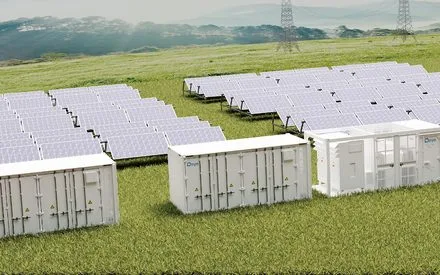
For a grid-connected plant with occasional outages, PV + BESS may be sufficient. A weak-grid, remote or mining operation may require PV + BESS + diesel generation for longer-duration continuity. Large multi-feeder facilities may need a purpose-designed microgrid controller and segmented critical buses. Deye presents these ESS, PV + ESS and PV + ESS + diesel configurations within its commercial and industrial solution.
Build a resilient energy plan with Deye ESS
Share your site location, load profile, critical-load runtime, PV and generator details, single-line diagram and commercial objectives with the Deye ESS team. We can help evaluate an appropriate C&I storage and microgrid configuration for your project and route product supply through authorised distributors.