
Energy arbitrage in battery storage means charging a battery when electricity is lower-cost or lower-value and discharging it when electricity is more expensive or more valuable. For a commercial facility, that can mean charging overnight and discharging during a peak tariff window, or storing surplus solar at midday for use later in the day.
Arbitrage is profitable only when the avoided cost or market revenue exceeds charging cost, conversion losses, battery wear, operating costs, and program fees.

How battery energy arbitrage works
A battery energy storage system combines battery capacity, a power conversion system, metering, controls, and an EMS. The EMS receives tariff, load, solar, SoC, and operating-limit information, then schedules charging and discharging.
A typical daily cycle may look like this:
- charge during a low-price period or from surplus PV;
- hold enough reserve for the next operating objective;
- discharge during a high-price period; and
- stop at the minimum permitted SoC or when the price signal no longer justifies discharge.
This is also called time shifting or load shifting. In wholesale markets, arbitrage may respond to day-ahead, intraday, or real-time prices. Behind the meter, it usually responds to retail time-of-use prices, demand charges, solar export value, or a combination of these.
The spread must cover more than the charging price
Suppose a battery buys or absorbs 1 MWh during a low-price period. Because the complete charge-discharge process has losses, less than 1 MWh will be delivered to the load or grid. The break-even calculation must therefore compare the value of discharged energy with:
- the energy needed to charge the battery;
- round-trip losses;
- auxiliary consumption;
- degradation or cycling cost;
- maintenance and software costs; and
- market or aggregator fees.
A simplified per-cycle margin is:
Net arbitrage margin = discharge revenue or avoided cost − charging cost − variable operating and degradation costs
If the battery charges from solar that would otherwise be exported, the charging opportunity cost is usually the lost export value—not zero.
Retail arbitrage versus wholesale arbitrage
Behind-the-meter retail arbitrage
A factory, warehouse, office, or shopping center may charge during off-peak hours and discharge during a defined peak tariff. The value is based on the customer’s tariff and meter position. Dispatch must also consider the facility load, PV production, demand limits, and backup reserve.
Front-of-the-meter wholesale arbitrage
A grid-connected storage asset may buy and sell energy through an approved market participant. Price volatility can create opportunities, but interconnection rules, bidding requirements, telemetry, availability obligations, and settlement costs are more complex.
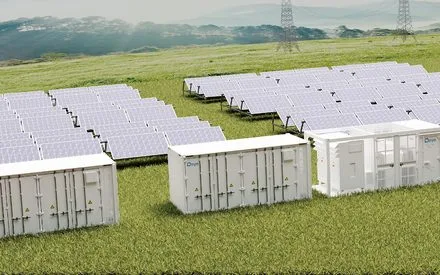
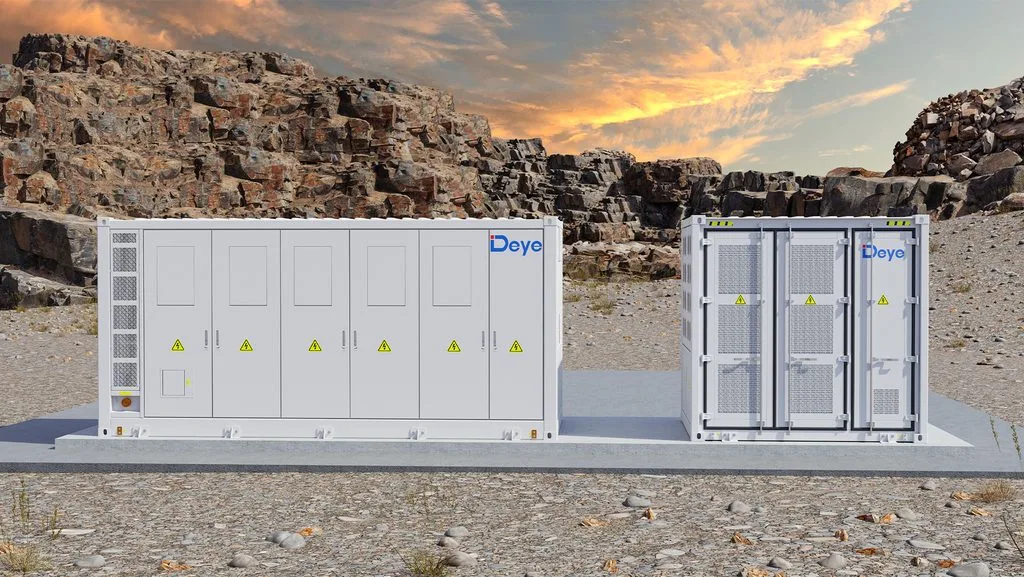
Deye offers both C&I ESS solutions and utility-scale ESS solutions. The right architecture depends on the point of connection, market role, power and duration, and local grid requirements.
When does energy arbitrage make sense?
Arbitrage is more promising when the site or market has a repeatable price spread, a sufficiently wide peak period, predictable load, and enough battery availability to act on the signal. It becomes less attractive when:
- peak and off-peak prices are too close;
- export compensation is already high;
- the battery must maintain a large backup reserve;
- demand charges dominate the bill but are not modeled;
- the price spike is too short or unpredictable;
- grid charging is restricted; or
- frequent cycling creates more wear than value.
Do not select battery capacity from the maximum tariff spread alone. Power determines how quickly the system can charge or discharge; energy determines how long it can sustain that output
How arbitrage interacts with peak shaving
Energy arbitrage targets price differences per kWh. Peak shaving targets the highest billed kW demand. A single discharge event may create both benefits, but the schedules can conflict.
For example, discharging the battery fully during an afternoon energy-price window may leave no reserve for a later demand peak. Conversely, holding energy for a possible peak may sacrifice an arbitrage opportunity. The EMS should optimize against the actual tariff rather than follow two independent schedules.
How arbitrage interacts with solar
Solar-plus-storage creates three possible destinations for each unit of PV energy: serve the load, charge the battery, or export. The economically preferred option changes throughout the day.
The controller should consider:
- current and forecast facility demand;
- battery SoC and power limits;
- PV forecast;
- import and export prices;
- export limits or curtailment;
- evening peak duration; and
- backup reserve.
When export value is low and evening electricity is expensive, storing midday solar may create value. When export value is high, unnecessary cycling can reduce returns.
The role of an EMS
An EMS converts the commercial objective into operating commands while respecting system limits. It can use schedules, forecasts, real-time meters, and reserve rules to coordinate the battery with site load and PV.
Deye’s MS-EMS provides a product route for teams evaluating energy management within a C&I architecture. Confirm the required tariff logic, third-party interfaces, cybersecurity, communications, fallback behavior, and market integration for the actual project.
The control strategy should also define what happens if communications fail, price data is unavailable, the meter is reversed, or the battery reaches a temperature or SoC constraint.
How to evaluate an arbitrage project
Use interval data and simulate at the same resolution used for billing or market settlement. At minimum, collect:
- 12 months of site load and PV data;
- complete import, export, and demand tariffs;
- market price history if applicable;
- grid-charging and export rules;
- battery power, usable energy, and efficiency assumptions;
- reserve and outage requirements;
- degradation and availability assumptions; and
- taxes, fees, maintenance, and financing inputs.
Report gross revenue, losses, cycling cost, net operating value, and the number and depth of cycles. Then test conservative price spreads and imperfect forecasts. A strategy that works only with perfect dispatch is not a reliable investment case.
Common procurement mistakes
Avoid using the highest historical price event as the annual norm, applying a single round-trip efficiency at every power level without justification, double-counting peak shaving and arbitrage, ignoring charging demand, or assuming unrestricted market access. Also confirm whether the warranty permits the modeled throughput and operating pattern.
FAQ
Is energy arbitrage the same as peak shaving?
No. Arbitrage shifts kWh between different price periods, while peak shaving reduces the highest billed kW demand. They can overlap but should be co-optimized.
Can a battery charge from the grid for arbitrage?
It may be technically possible, but tariff, interconnection, incentive, and market rules vary. Confirm local permission and metering treatment before including grid charging in the financial model.
Does a larger battery always earn more?
No. A larger system may have unused capacity if the price window, grid connection, or site load is too small. Model marginal revenue against marginal project cost.
How often should an arbitrage battery cycle?
The optimal frequency depends on price spreads, efficiency, degradation, warranty limits, and other operating priorities. More cycles do not automatically mean more profit.
Can energy arbitrage provide backup at the same time?
Yes, if the controls maintain a reserve. That reserve reduces the energy available for arbitrage, so its cost and resilience value should be made explicit.
Model the dispatch before choosing the capacity
Planning a C&I or utility storage project? Contact Deye ESS with interval load and PV data, tariff or market rules, point of connection, desired power and duration, backup reserve, project location, and operating objective. A dispatch simulation can show whether arbitrage, peak shaving, or a combined strategy creates the stronger case.