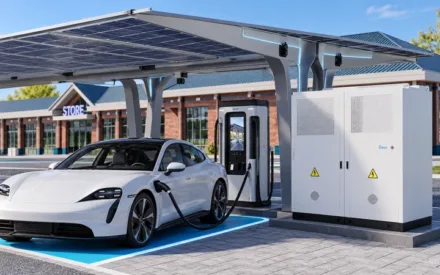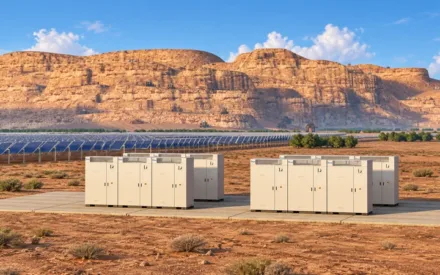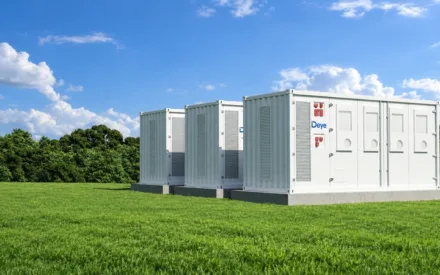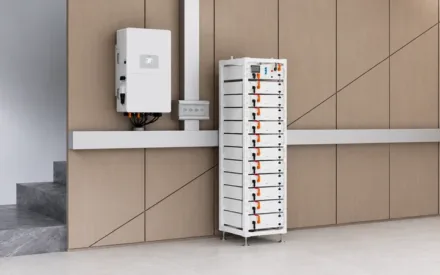
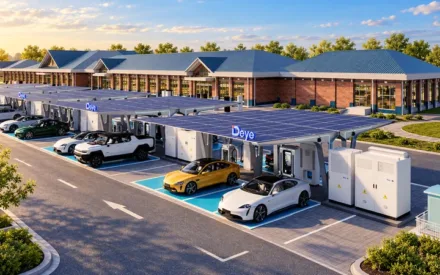
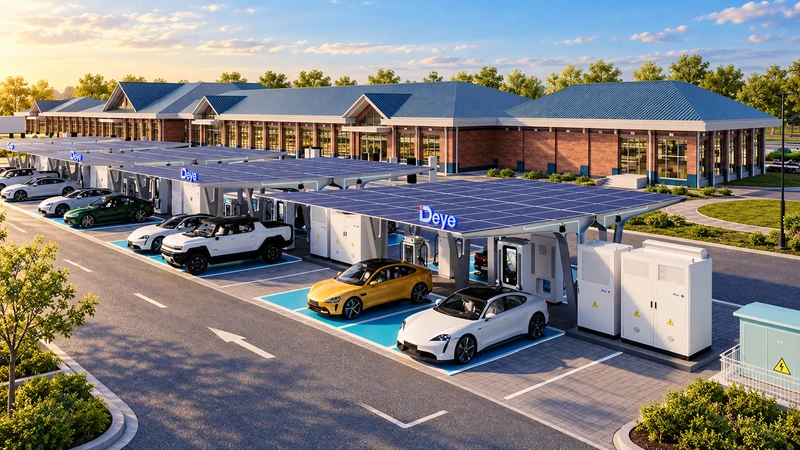
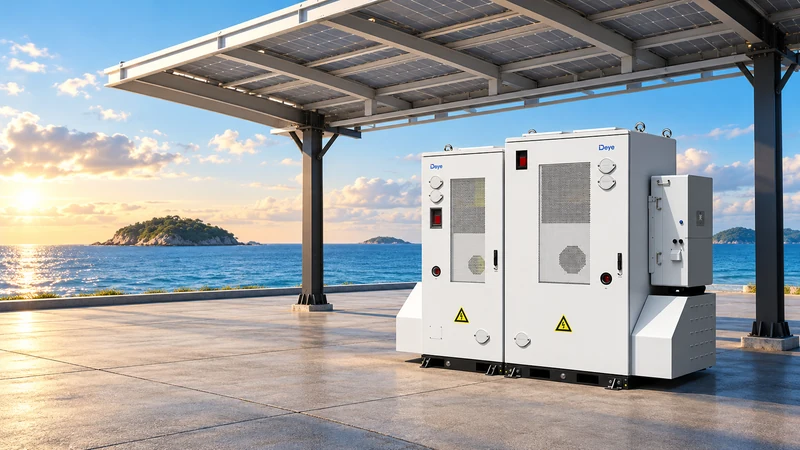
A solar carport with battery storage combines a photovoltaic canopy over parking spaces with a stationary battery and coordinated controls. Solar electricity can serve building loads, charge electric vehicles, or enter the battery for later use. The right design depends on parking geometry, PV production, load timing, electrical capacity, tariffs, and any backup requirement.
For workplaces, retail properties, campuses, and fleet depots, the strongest project starts with a defined operating objective. Installing a battery simply because a carport has solar panels does not establish a financial benefit.
What benefits can the combination deliver
The canopy uses parking space for electricity generation while providing shade. Battery storage adds flexibility by moving part of that generation into a different time window.
Potential energy benefits include higher solar self-consumption, reduced import peaks where tariffs reward them, and support for charging demand above the site’s direct supply. Results depend on the actual load profile and controller settings.
Backup is a separate design decision. Supplying selected loads during an outage requires suitable inverter functions, switching, protection, and a defined islanded network. A solar canopy and battery do not automatically maintain every charger or building circuit during grid failure.
The Deye PV-BESS-EV charging solution is a useful starting point for evaluating coordinated generation, storage, and charging at commercial sites.
Start with parking use and load data
Collect interval building demand, electricity bills, parking occupancy, vehicle dwell time, and planned charging sessions. Establish whether vehicles need rapid turnaround or can charge over several hours.
Workplace vehicles parked through midday may use solar directly, reducing the need to store that energy. A depot whose vehicles return after sunset has a different requirement. Retail charging demand may vary strongly by day and season.
Define the preferred operating priorities before sizing: for example, serve site demand first, maintain a backup reserve, then reduce imports during a specified peak period. Competing objectives share the same battery and need one dispatch model.
Design the canopy and PV array around the site
Have qualified designers review bay dimensions, traffic circulation, height clearance, accessible routes, drainage, foundations, underground services, and wind and snow loading as applicable. Establish how construction will affect parking access and ongoing operations.
Estimate annual and seasonal PV yield using the actual location, orientation, shading, module layout, and equipment losses. Do not derive a bankable energy forecast from parking-space count alone.
Locate electrical equipment with maintenance and emergency access in mind. Battery siting should account for vehicle impact exposure, flood risk, environmental conditions, cable routing, and applicable separation requirements. Resolve these through the local design and approval process.
Size battery energy from the intended time shift
First calculate how much PV surplus exists after simultaneous site demand and permitted exports. Then identify when that stored energy has a useful destination.
Illustrative sizing example
Assume the modeled canopy produces a 40 kW surplus for three hours on a particular day. That provides 120 kWh at the chosen AC charging boundary. At an assumed 90% AC-to-AC cycle efficiency, approximately 108 kWh could later be delivered, provided the battery can accept the surplus and has sufficient headroom.
If the intended evening load is 30 kW for three hours, it requires 90 kWh at the AC load boundary. The energy may be sufficient for that modeled day, but the battery and converter must also support the required charge and discharge power. Reserve, degradation, temperature, and poor-solar days still need assessment.
These numbers are illustrative assumptions. They are not a PV production forecast or Deye performance specification.
Choose the electrical architecture deliberately
| Design decision | What to evaluate |
| AC or DC coupling | Existing equipment, conversion paths, compatibility, expansion, and clipping recovery |
| Battery power | Peak-shaving target, charger demand, and available surplus charging power |
| Battery energy | Surplus duration, evening consumption, reserve, and end-of-life requirements |
| Charging equipment | Vehicle compatibility, dwell time, simultaneous sessions, and power management |
| Metering and controls | Import/export limits, tariff intervals, operating priorities, and failure responses |
| Backup boundary | Critical loads, transition requirements, islanding design, and allowable runtime |
An existing site with AC-connected PV may favor one integration approach; a new development may offer more choices. Select through an electrical study and lifecycle cost comparison.
For sites focused on building demand and self-consumption, review the Deye C&I ESS solution. Where EV charging is central, assess the MC-LC430-2H2 Series against regional project documentation. Neither route replaces structural engineering for the canopy.
Evaluate the complete business case
Include canopy structure, foundations, PV equipment, battery system, charging equipment, grid works, metering, permits, maintenance, insurance, and any disruption to parking revenue.
Compare at least a solar-only design, solar with managed charging, and solar with storage. Value self-consumed electricity using avoided import costs and exported electricity using applicable export terms. Deduct storage losses and operating costs.
Use measured tariff rules for demand-charge savings. Do not assign the same stored kWh simultaneously to backup, evening use, and EV charging. Test lower PV yield, higher vehicle utilization, changing energy prices, and battery degradation before choosing capacity.
Prepare a useful project brief
Contact Deye ESS with a parking layout, site location, proposed PV capacity or available area, interval loads, charger schedule, grid import and export limits, tariff, backup needs, and project timeline. Request a clearly bounded storage and controls proposal that can be coordinated with the canopy designer and electrical contractor.
Frequently asked questions
Does every solar carport need a battery
No. If daytime loads already use most solar production, storage may add limited value. Compare direct use, managed charging, exports, and storage using the same data.
Can the carport charge vehicles after sunset
Yes, if stored energy or grid electricity is available through the designed system. Overnight charging capacity depends on battery SOC, converter power, grid limits, and vehicle demand.
Will the battery power the whole property during an outage
Only if the electrical system is designed for that service. Define critical loads and required runtime, then verify inverter capabilities, switching, protection, and available energy.
Should storage be sized to capture every sunny-day surplus
Not automatically. Capturing rare surplus peaks can add cost with limited annual benefit. Compare marginal recovered energy with equipment and operating costs across a full year.