Battery storage fire safety is not proven by one certificate, one suppression component or a chemistry label. For a commercial or utility-scale project, safety depends on a matched chain: listed equipment where required, representative test evidence, site layout, detection and protection systems, electrical integration, emergency planning, installation quality and approval by the authority having jurisdiction (AHJ).
Begin with the distinction between product and installation requirements
In North American projects, UL 9540 is widely used as the product safety standard for energy storage systems and equipment. It addresses the ESS as an integrated product. UL 9540A is different: it is a test method used to evaluate thermal runaway fire propagation behaviour and related fire/explosion hazards at progressively representative levels. It is not a product listing.
NFPA 855, Standard for the Installation of Stationary Energy Storage Systems, addresses installation safety. The adopted building and fire code—often including the International Fire Code (IFC)—and the local AHJ determine what is enforceable for a particular location. Other countries and regions use different legal frameworks, certifications and code editions. Always confirm the governing jurisdiction before freezing the design.
What UL 9540A evidence should tell a project team
A useful fire-test report must match the product and intended installation closely enough to support the design decision. Check the battery cell, module/rack arrangement, enclosure, ventilation approach, detection and suppression configuration, spacing and the test edition. A result for one configuration should not be assumed to apply to a different container, battery module, layout or installation condition.
UL 9540A evaluates thermal-runaway propagation and fire behaviour through levels of testing. Current editions and adoption timelines are evolving, so project teams should confirm the edition accepted by the AHJ and request the relevant documentation early. The report may inform separation distances, protection measures and emergency planning, but it does not remove the need for site-specific fire-engineering review.
A simple map of the standards and approval process
| Layer | Typical question | Evidence or action |
| Equipment | Is the ESS product suitable and listed/certified where the market requires it? | Exact model documentation, listing/certification scope and instructions |
| Fire behaviour | What happens in a representative thermal-runaway scenario? | Applicable UL 9540A or other accepted evidence, including configuration limits |
| Installation | Is this location, layout and protection design acceptable? | Adopted code analysis, site drawings and engineering design |
| Approval | Will stakeholders approve the project? | Early review with AHJ, fire department, insurer and qualified professionals |
| Operation | Will the system remain safe after handover? | Commissioning records, emergency plan, training and maintenance programme |
This framework avoids a common procurement error: comparing a product certificate with another supplier’s site fire strategy as though they were equivalent. Both may be needed, but they answer different questions.
From concept design to operation: the safety workflow
At concept stage, identify the jurisdiction, occupancy, indoor/outdoor location, stored energy, neighbouring exposures and first-responder access. During design, establish equipment configuration, spacing, detection, suppression, ventilation/deflagration provisions where relevant, emergency stops, signage and electrical isolation. Before energisation, verify the installed system against approved drawings, test alarms and interlocks, train responsible personnel and coordinate the emergency plan. During operation, record alarms, maintain equipment according to instructions, control changes and revise documentation if the installation changes.
The AHJ has final local authority. Insurers or utilities can add requirements, so seeking agreement only after containers, foundations or cable routes are fixed can create delay and rework.
Documents to request at tender stage
Create a controlled document register: model-specific data sheets and manuals, certificate/listing scope, test-report references and limitations, proposed site layout, single-line diagram, fire-protection concept, alarm and shutdown matrix, commissioning plan, maintenance plan and emergency-response information. Asking for these early gives the owner, EPC, AHJ and insurer a shared basis for review and exposes configuration gaps before the commercial award.
Update the register whenever equipment configuration, layout, operating mode or emergency contacts change. The final as-built package should be accessible to site operators and responders, not retained only in the project close-out archive.
Standards are only one part of the safety case
For a BESS project, the safety case should address the following together:
- Prevention and monitoring: BMS limits, temperature and electrical monitoring, cooling, insulation/ground-fault protection, alarms and maintenance procedures.
- Detection and mitigation: detection of smoke, heat and/or off-gas as appropriate to the design; emergency stops; ventilation or deflagration controls; fire protection; and isolation logic.
- Layout and access: separation distances, egress, exposure protection, emergency access, crane/service access, signage and communication with first responders.
- Electrical integration: switchgear, protection coordination, grounding, isolation points, auxiliary power and safe failure modes.
- Operations: commissioning records, training, inspections, alarm response, change control, remote-monitoring responsibilities and end-of-life planning.
The correct measures depend on the installed system, enclosure and site—not only the battery chemistry. Do not promise that a battery is “fireproof” or that a test result guarantees zero risk.
A practical pre-procurement checklist
Ask the supplier and EPC to provide or define:
- Exact model numbers, ratings, equipment listing/certification scope and applicable standards by destination market.
- Representative UL 9540A or other fire-test documentation requested by the AHJ, including configuration and limitations.
- Site plan with spacing, exposures, access, fire-water/suppression provisions and ventilation/pressure-relief strategy where applicable.
- Single-line diagram, protection philosophy, emergency-stop locations and loss-of-auxiliary-power behaviour.
- Gas, smoke, heat and thermal monitoring design; alarm routing; and local versus remote response responsibilities.
- Commissioning, functional testing, maintenance, training and incident-response documentation.
- A meeting plan with the AHJ, fire department, insurer, owner, EPC and system supplier before procurement is irreversible.
Match the system to the application
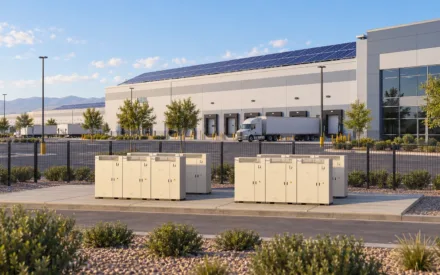
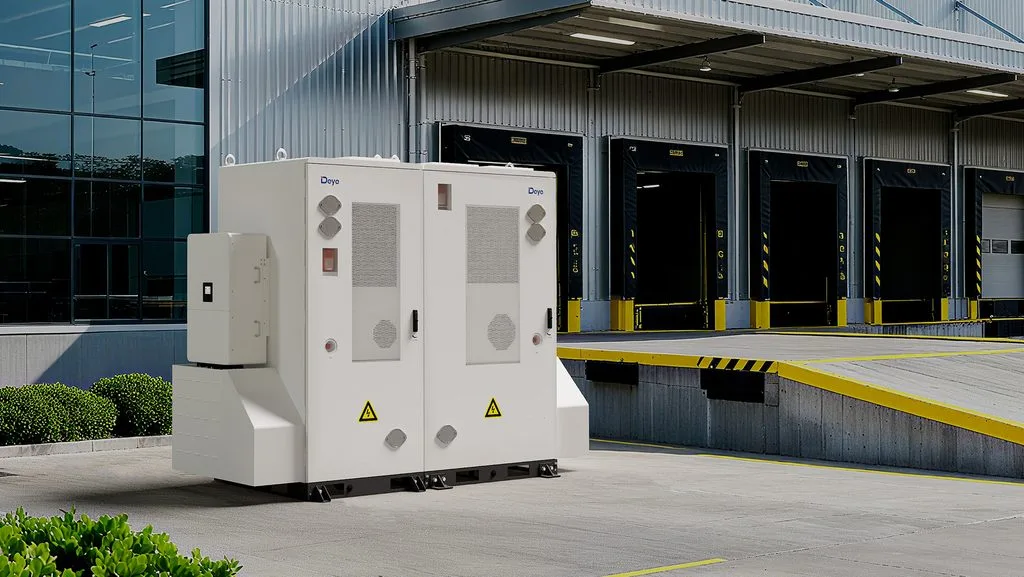
A C&I battery beside a factory, an indoor installation, a remote containerised project and a utility-scale site create different site and approval questions. Deye offers C&I ESS configurations for ESS, PV + ESS and PV + ESS + diesel generation; start solution selection through the C&I ESS page and consider large-project architectures through the utility-scale ESS solution.
For critical facilities, fire safety also needs to fit the continuity strategy. Review the transfer sequence, auxiliary power, cooling, protection and emergency operations alongside the battery system. See Deye’s guide to battery storage for data centers and critical loads for the broader resilience-design context.
Frequently asked questions
Is UL 9540A a certification? No. It is a test method used to assess thermal-runaway propagation and fire/explosion behaviour; product listing and installation compliance are separate questions.
Does a UL 9540A report apply to every installation? No. Its relevance depends on the tested configuration and intended site design. The AHJ and qualified professionals determine acceptable evidence.
Does LiFePO4 eliminate fire-safety design work? No. Chemistry is one project input. Electrical, thermal, layout, detection, protection and emergency-response design remain essential.
Engage Deye ESS early in the safety review
Before selecting a BESS, send your country, site layout, intended application, required capacity/power, indoor or outdoor location, local code/AHJ requirements and target commissioning date to Deye ESS. We can help begin a product and solution discussion with the documentation and project interfaces needed for your market. Final design and approvals must be completed by qualified project professionals and the applicable authorities.