
Yes—solar panels can recharge a home battery during a grid outage, but only if the system was designed for backup operation. A normal grid-tied solar installation usually shuts down when the grid fails. This safety function prevents the inverter from sending electricity into utility lines while crews may be working on them.
To keep using solar during an outage, the home needs a compatible hybrid or backup inverter, battery storage, an approved transfer or isolation method, and a protected backup-load circuit. The system must be able to create its own stable local supply after disconnecting from the utility grid.
In other words, having panels and a battery does not by itself guarantee daytime recharging during a blackout. The complete system architecture matters.
What Happens When the Grid Goes Down?
In normal grid-connected operation, the inverter follows the grid’s voltage and frequency. When it detects a loss of grid power, it must stop exporting electricity. A backup-capable system then isolates the protected part of the home from the grid and establishes an off-grid supply for selected circuits.
Once this local power supply is stable, solar energy can follow one of three paths:
- Power the home’s active backup loads.
- Charge the battery with any remaining solar production.
- Be limited or curtailed when the loads are low and the battery is full.
If household demand is greater than current solar production, the battery supplies the difference. At night, the battery becomes the main source until grid power returns, the minimum state of charge is reached, or another backup source starts.
The Equipment Needed for Solar Recharging During an Outage
A solar-plus-storage backup system normally includes:
- Solar panels and the required DC protection.
- A hybrid inverter or another approved inverter arrangement that supports off-grid operation.
- A compatible battery and battery management system.
- A transfer, isolation or gateway device that prevents backfeed to the grid.
- A critical-loads panel or another approved method of separating backup circuits.
- Monitoring and controls for solar, battery and load management.
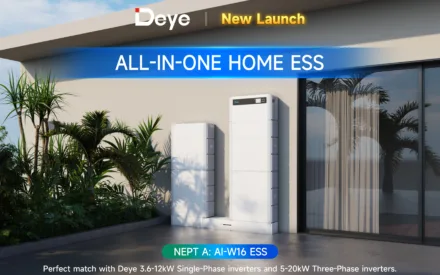
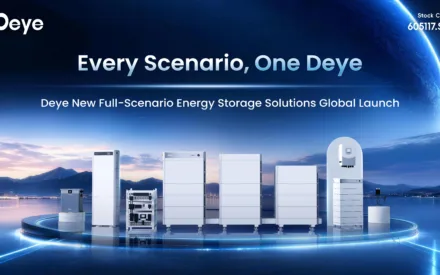
Compatibility is essential. The inverter must be able to communicate with the battery, work within its voltage and current limits, and manage charging when the home is operating as an island. The Deye residential ESS solution illustrates common combinations such as PV plus storage and PV plus storage with a generator.
Why Some Solar-and-Battery Systems Still Cannot Recharge
Several design issues can prevent solar charging during a blackout.
The Inverter Is Grid-Tied Only
A grid-tied inverter without backup capability shuts down when the utility supply disappears. Even if a battery is installed elsewhere, the system may not have a way to form a stable off-grid network.
There Is No Safe Grid Isolation
The home must be electrically separated from the utility before local generation can energize backup circuits. This is a fundamental safety requirement, not an optional feature.
The Battery Has Reached Its Operating Limit
The battery management system may restrict charging at very high or low state of charge, outside the permitted temperature range, or when it detects a fault. Solar energy may then be curtailed even though sunlight is available.
Solar Production Is Too Low
Panels produce less power in cloud, shade, early morning and late afternoon. During an outage, the system first has to support active loads. Only the surplus can charge the battery. A 5 kW array producing 1.5 kW cannot recharge the battery if backup loads are already using 2 kW.
A Simple Daytime Outage Example
Assume the solar array is producing 4 kW at midday. The refrigerator, internet equipment, lights and other protected loads are using 1.2 kW. Ignoring conversion losses for a simple illustration:
Available battery charging power = 4.0 kW – 1.2 kW = 2.8 kW
If 5 kWh of energy needs to be returned to the battery, the ideal charging time would be about:
5 kWh / 2.8 kW = 1.8 hours
Real charging takes longer. Solar output changes, the inverter and battery have power limits, conversion causes losses, and charging power may taper near a high state of charge. This is why a daily energy model is more useful than a calculation based only on panel nameplate power.
Whole-Home Backup or Essential Loads?
Backing up every circuit is possible in some systems, but it increases the required inverter power and battery capacity. Large loads such as electric water heaters, ovens, central air conditioners and EV chargers can drain a battery quickly or exceed the inverter’s output.
An essential-loads design usually prioritizes refrigeration, lighting, communications, security, medical equipment and selected outlets. Lower demand leaves more daytime solar available for recharging and helps the battery last through the night.
Start by listing each load’s running power, startup demand and required hours of operation. Then decide which loads can be delayed until the grid returns. Smart load control can automatically shed lower-priority equipment when battery energy is limited.
Reserve Settings Matter Before the Outage Starts
A home battery used only for bill savings may enter an outage with little energy left. If backup is important, set an appropriate minimum reserve through the approved controls. A higher reserve provides more outage protection but leaves less capacity for daily tariff shifting or solar self-consumption.
Weather forecasts and time-of-use tariffs can also affect the strategy. Before severe weather, some systems can preserve or increase the reserve. The correct settings depend on the product, local rules and the owner’s priorities.
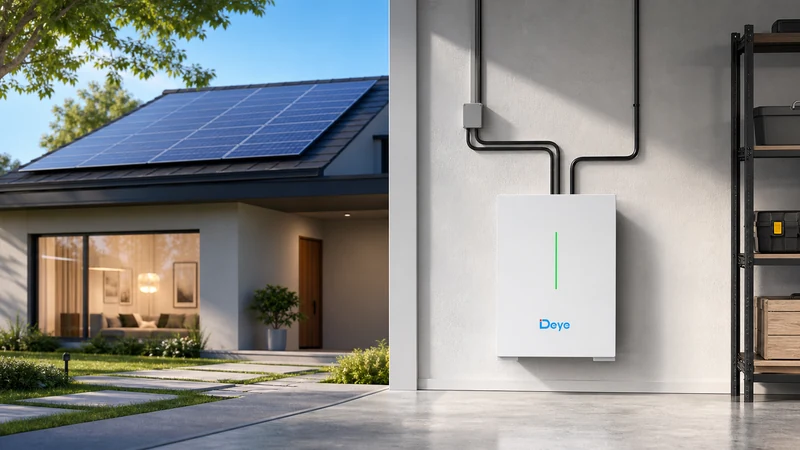
For a practical example of usable energy and operating limits, the Deye RW-F10.2-B home battery lists 10.24 kWh nominal energy, 9.2 kWh usable energy and a recommended 90% depth of discharge. Actual backup time still depends on load and system configuration.
Questions to Ask Before Buying
Ask the designer or installer to confirm:
- Will the system recharge from solar while the grid is unavailable?
- Which circuits will remain powered?
- What continuous and surge power can the backup output deliver?
- Can the system restart from a low battery when sunlight returns?
- How are excess solar and a full battery managed?
- What reserve will be maintained in normal operation?
- Can a generator be integrated for longer outages?
- Which functions depend on internet or cloud access?
Answers should refer to the exact inverter, battery, firmware and approved wiring design.
Design for the Outage You Actually Need to Cover
Solar panels can recharge a home battery during a grid outage when the inverter can operate off-grid, the home is safely isolated, and solar production exceeds the protected loads. Good results come from treating solar, storage and backup circuits as one coordinated system.
Planning a solar-plus-storage system that must keep charging during blackouts? Use the Deye ESS Contact page to submit an inquiry. Share your country, existing or planned PV size, daily electricity use, essential loads, target backup hours and whether you need generator support. The team can use that information to discuss a suitable system approach and product selection.