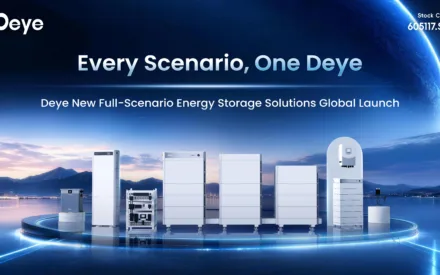
At The smarter E Europe 2026, Deye officially received Italian CEI 0-21 certification from Kiwa, an internationally recognized testing and certification organization. The certification covers Deye’s SG06 Series 3.6–10 kW single-phase low-voltage hybrid inverters and the SE-F12 low-voltage residential energy storage battery.
The certification ceremony was attended by representatives from Deye, LYNS-TCi and Kiwa. The participants included Mr. Chen Xudong, Director of the Deye Inverter R&D Center; Mr. Zheng Weizhao, Technical Director of LYNS-TCi; Mr. Juergen Seidel, Business Development and Sales Manager at Kiwa; and Mr. Luca Votta, Kiwa’s Global Business Sector Leader for Energy Transition.
Receiving CEI 0-21 certification confirms that the certified Deye residential energy storage products meet the technical and safety requirements for connection to Italy’s low-voltage distribution grid. It also provides an important foundation for Deye’s continued development in the Italian residential energy market.
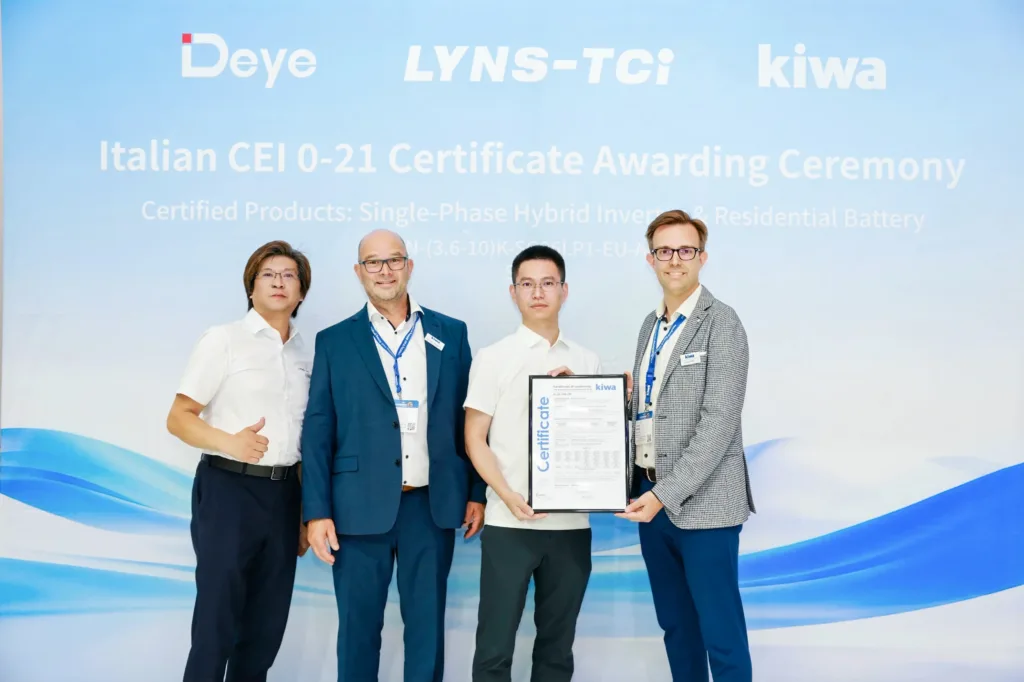
(From left to right: Mr. Zheng Weizhao, LYNS-TCi; Mr. Juergen Seidel, Kiwa; Mr. Chen Xudong, Deye; and Mr. Luca Votta, Kiwa)
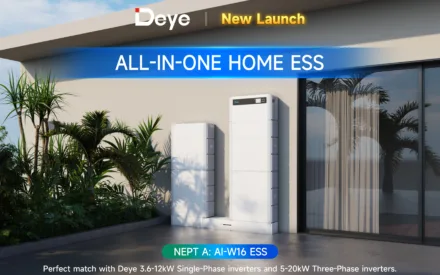
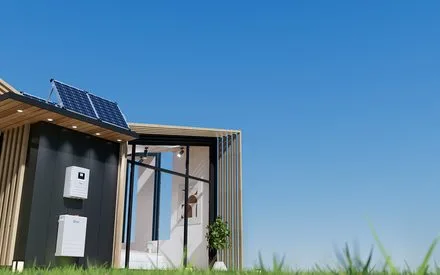
Safety, reliability and grid compliance are essential in the European residential energy storage market. Deye’s SG06 Series 3.6–10 kW hybrid inverters are designed to meet the changing energy needs of European households while acting as the central control point between solar generation, battery storage, household loads and the utility grid. Millisecond-level switching between on-grid and off-grid operation helps maintain the power supply to essential household appliances when the grid becomes unstable.
This capability gives homeowners greater control over how electricity is generated, stored and consumed. Instead of depending entirely on grid electricity, households can store surplus solar power and use it when needed. This supports higher solar self-consumption, improved backup capability and greater energy independence. Users can learn more about these applications through Deye’s residential energy storage solutions.
The Deye SE-F12 residential battery reflects the same focus on safety, performance and practical household use. It uses lithium iron phosphate battery chemistry together with an advanced battery management system. The BMS continuously monitors important operating data, including voltage, current and temperature, helping the battery remain within its approved operating limits.
Its modular design and scalable capacity make installation and future expansion more flexible. Homeowners can select a configuration based on their current electricity use and add capacity later as household demand changes. This allows the energy storage system to grow alongside additional solar panels, new electrical appliances, heat pumps or electric vehicles.
Italy is an important market for residential energy storage and applies rigorous technical requirements to equipment connected to the low-voltage grid. Achieving CEI 0-21 certification demonstrates Deye’s investment in product development, testing and quality control. Deye plans to continue working with Kiwa and LYNS-TCi to support the introduction of compliant residential energy solutions in Italy and across Europe.
By developing safe, efficient and grid-compliant energy storage products, Deye aims to support higher standards throughout the residential storage industry. The company will continue combining product innovation with international testing and certification to provide European households with more reliable and sustainable energy solutions. For product selection, technical cooperation or project inquiries, visit the Deye ESS contact page and complete the inquiry form with your market, system requirements and expected battery capacity.