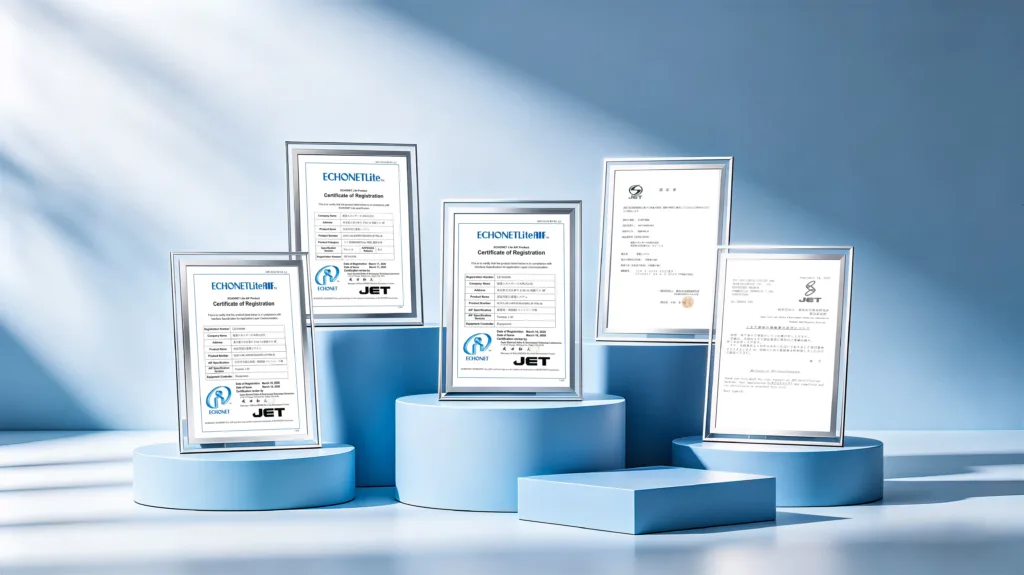
Deye’s residential energy storage solution has received system-level certification from the Japan Electrical Safety & Environment Technology Laboratories (JET), together with ECHONET Lite and ECHONET Lite AIF dual certification. This milestone confirms that Deye’s solution meets Japan’s strict requirements for safety, reliability and intelligent connectivity. It also strengthens Deye’s position in the Japanese residential energy storage market.
Safety Validation: Battery Certified to JIS C 8715-2
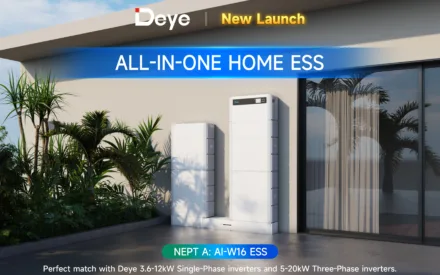
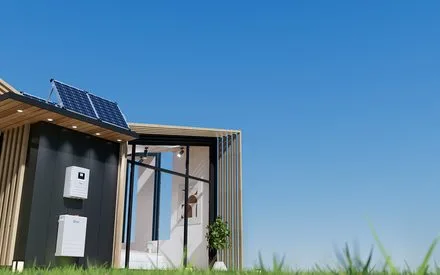
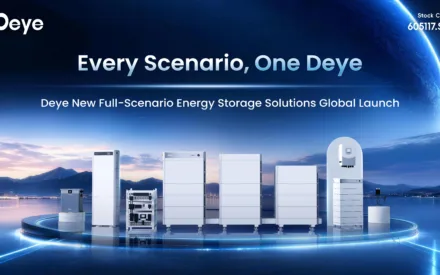
The GB-A battery series is a stackable energy storage solution designed for Japanese households. It offers flexible capacity options of 4 kWh, 10 kWh and 16 kWh, together with an IP65 enclosure rating. The system is suitable for both household backup power and solar self-consumption applications.
The battery system was rigorously tested according to JIS C 8715-2:2024. The assessment covered electrical safety, mechanical integrity, environmental adaptability, system protection, thermal runaway control, material structure and performance consistency. Certification demonstrates the battery’s ability to operate reliably under Japan’s varied environmental conditions, including high temperatures, humidity and coastal climates.
Safety Compliance: Inverter Certified to JIS C 4412
Deye’s inverter has also passed testing according to JIS C 4412:2021 and CISPR 11 Ed. 6.2:2019. These standards address important requirements for low-voltage energy storage equipment in Japan. Testing covered electromagnetic compatibility, electrical safety, structural integrity and environmental durability, providing additional assurance of stable and safe system operation.
Smart Connectivity: ECHONET Lite and AIF Dual Certification
Deye’s residential ESS has also received ECHONET Lite and ECHONET Lite AIF certification. ECHONET Lite is a standard communication protocol used by Home Energy Management Systems in Japan. It allows the Deye system to integrate with compatible HEMS platforms and smart home ecosystems.
This connectivity enables users to manage different household devices through a unified interface, such as a smartphone application or centralized control system. Compatible devices can include air-conditioning systems, lighting, photovoltaic systems and residential energy storage equipment.
Through ECHONET Lite integration, the energy storage system can coordinate with other household equipment to improve emergency backup performance. During a grid outage, the HEMS can communicate with the storage system and initiate off-grid operation. This helps maintain power for critical household loads while improving overall energy resilience and delivering a more intelligent user experience.
Certified System Models
The certified split-type residential ESS models include:
- SUN-8K-16KWH-SG02HP2-JP-FM4
- SUN-8K-10KWH-SG02HP2-JP-FM4
- SUN-5.5K-16KWH-SG02HP2-JP-FM4
- SUN-5.5K-10KWH-SG02HP2-JP-FM4
- SUN-4.95K-10KWH-SG02HP2-JP-FM4
Conclusion
With JET system certification, compliance with key Japanese safety standards, and ECHONET Lite connectivity, Deye’s residential ESS addresses the Japanese market’s main requirements for safety, reliability and intelligent control.
This achievement represents an important step in Deye’s continued development of advanced residential energy storage solutions. Deye will continue using recognized certification systems and intelligent technologies to deliver safer, smarter and more dependable energy solutions for households across Japan.