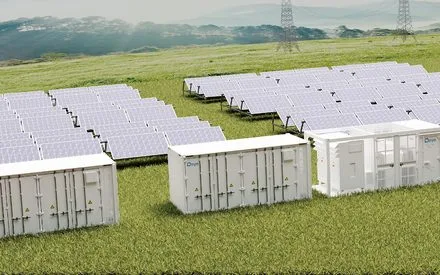

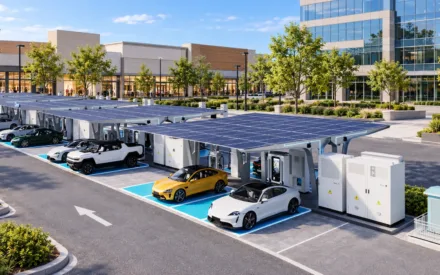
Liquid cooling is transforming how we store and manage energy, especially as renewable sources like solar become more widespread. By using advanced thermal management, these systems keep batteries safer, last longer, and deliver higher efficiency in a compact footprint. Here’s what makes liquid-cooled energy storage systems a smart solution for modern energy needs.
Core Technology and Key Features
Liquid Cooling Mechanism
Liquid cooling works by circulating a coolant—such as deionized water or special fluids—around battery modules. As the batteries operate, they generate heat that the liquid quickly absorbs and carries away. The heated coolant then moves through a heat exchanger to cool down before returning to the battery modules.
This method removes heat much faster than air cooling, allowing battery cells to operate safely even at high power loads. The direct contact cooling path ensures even temperature distribution, reducing the risk of hot spots and extending battery lifespan.
Thermal Management System
The thermal management system combines sensors, controllers, and a liquid cooling unit to maintain precise temperature control. An intelligent battery management system (BMS) monitors each battery module’s temperature in real time and adjusts coolant flow as needed, keeping batteries typically within 20°C to 35°C for optimal performance.
Modern systems can keep temperature differences within a battery pack under 5°C, preventing cell damage and supporting longer battery life. The thermal management adapts to external conditions, maintaining efficiency from -30°C to 55°C.
High Energy Density Design
Liquid-cooled battery packs achieve higher energy density by eliminating bulky air ducts required in air-cooled systems. Batteries can be placed closer together, increasing storage capacity in the same footprint. This compact design is ideal for installations with limited space, delivering up to 40% more energy per square meter than air-cooled alternatives.
The integration of cooling plates and battery modules also enhances structural stability and operational efficiency, resulting in a reliable and space-saving solution.
System Architecture and Safety
Battery Management Innovation
The battery management system (BMS) acts as the control center, tracking voltage and temperature of each cell in real time. Liquid-cooled systems often contain more battery cells per pack than air-cooled ones, requiring the BMS to process more data for accurate state of charge and health calculations.
The BMS automatically manages cell balancing, temperature control, and communicates with cooling, fire safety, and the main converter. Users can access system data via mobile or computer interfaces for easy monitoring and maintenance.
Integrated Fire Safety System
Integrated fire suppression systems work with the thermal management to detect and address temperature spikes or smoke before they escalate. These safety features are built into the energy storage system, meeting standards such as UL1973 and UN38.3 for commercial installations.
Sensors monitor temperatures throughout the container. If overheating is detected, the system can isolate affected areas and activate suppression, preventing thermal runaway and ensuring continued operation elsewhere.
Multi-Layer Protection Standards
Containerized energy storage systems use multiple protection layers, including:
- Electrical isolation and circuit protection
- Continuous temperature monitoring and cooling control
- Fire detection and suppression
- Weather-resistant physical enclosures (IP54 rated)
- Remote monitoring and automatic shutdown
Each battery pack functions independently, so a fault in one does not impact the rest. This design increases reliability and simplifies maintenance.
Applications and Deployment
Large-Scale and Industrial Usage
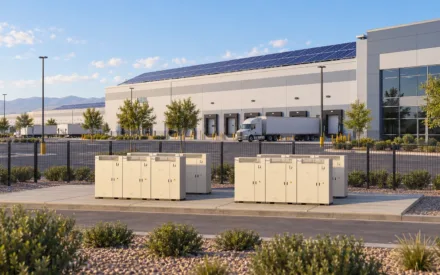
Utility-scale energy storage plants and industrial facilities use liquid-cooled systems to manage higher power densities and maintain safe battery temperatures. These systems are ideal for installations ranging from 208kWh to 5MWh, where efficient thermal management is crucial for safety and long-term operation.
Liquid cooling’s compact design saves significant space—up to 23% compared to air-cooled systems—making it suitable for manufacturing plants, data centers, and commercial buildings. The technology maintains temperature differentials below 2.3°C across battery cells, extending system lifespan by over 30%.
Certified solutions from providers like GSL Energy ensure compliance with UL, CE, and IEC standards, offering reliable performance for commercial and industrial applications. AI-driven thermal management further optimizes efficiency and adapts to changing operational conditions.
Peak Shaving and Frequency Regulation
Liquid-cooled systems help reduce electricity costs through peak shaving, discharging stored energy during times of high demand and recharging when rates are low. For frequency regulation, these systems provide the rapid response needed by grid operators, switching between charging and discharging in milliseconds to stabilize grid frequency.
The advanced thermal management prevents overheating during frequent cycling, which is a common issue in air-cooled batteries. This ensures reliable performance and longer battery life in demanding grid applications.
Renewable Energy Integration
As solar and wind power become more prevalent, reliable storage is essential to manage variable energy production. Liquid cooling ensures optimal battery performance through frequent cycles, making it the most effective solution—particularly in hot climates. With enhanced safety features, these systems guarantee stable, efficient, and long-term renewable energy storage.
Deye’s Advanced Liquid Cooled Energy Storage Solutions
Deye leads the industry in liquid cooled battery systems designed for maximum thermal efficiency, safety, and reliability. Whether you’re managing peak shaving, grid frequency regulation, or renewable energy integration, Deye’s liquid cooled systems ensure optimal battery performance while maintaining temperatures within safe operating ranges. Visit deyeess.com to discover why leading facilities trust Deye for energy storage.
Frequently Asked Questions
How does a liquid-cooled system perform in extremely cold climates, and are there winterization requirements?
Liquid cooling systems operate reliably down to -30°C. Cold weather benefits performance by reducing cooling demands. Winterization requires antifreeze (glycol-based solution) in the coolant circuit and ensuring circulation pumps remain operational during idle periods. Insulated lines and trace heating prevent crystallization. Most modern systems include automatic winterization protocols triggered by temperature sensors.
Can I retrofit an existing air-cooled system to liquid cooling, or must I replace the entire installation?
Complete replacement is necessary — liquid-cooled systems have fundamentally different architecture and battery pack design, making retrofitting economically impractical. However, adding new liquid-cooled modules alongside existing air-cooled units is possible during expansions with proper BMS integration and isolation between systems.